
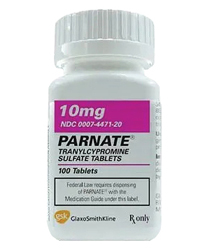

What is Parnate (Tranylcypromine) prescribed for?
Tranylcypromine, commonly known as Parnate, is prescribed for treating the symptoms of Major Depressive Disorder. There are several medications that can be used together or in conjunction with Parnate. The safety and effectiveness of Parnate in children is unknown. A monoamine oxidase inhibitor (MAOIS), Parnate is utilized to treat depression. Depression is treated with this medication by restoring the balance of certain brain chemicals (neurotransmitters). You can feel better and your mood can improve when you take parnate.
Parnate (Tranylcypromine) FAQs
How To Use Parnate (Tranylcypromine)?
The medication should be taken by mouth, normally in divided doses according to your doctor's instructions. A dose of this medication is usually not more than 60 milligrams per day. Your dose depends on your medical condition and response to therapy. It may be taken with or without food.
Starting at a low dosage and gradually increasing it may reduce your risk of side effects. You may be able to reduce your regular dose once your condition improves and you feel better for a while. Be sure not to take more or less medication than prescribed.
Follow your doctor's instructions and the medication guide carefully. if you take more than your recommended dose your condition will not improve. You may have an increased risk of side effects.
Taking this medication regularly will help you to get the most benefit. Make sure you take it at the same time( each day to keep yourself from forgetting. If you are taking this medication, you may not notice the full benefits for several weeks. Call your doctor before you stop taking tranylcypromine.
This medication may cause withdrawal symptoms (such as restlessness, confusion, hallucinations, headaches, weakness, and diarrhea) if you suddenly stop using it. It may be necessary for your doctor to lower your dose slowly in order to prevent withdrawal symptoms. In the event of withdrawal, tell your doctor or pharmacist as soon as possible. If you have been using tranylcypromine for long or at a high dosage, you are more likely to experience withdrawal symptoms.
Please notify your physician if your condition worsens or lasts for an extended period of time.
What are the possible side effects of Parnate (Tranylcypromine)?
The most commonly reported side effects of (Tranylcypromine) include:
- difficulty breathing
- sudden and severe headache
- mood or behavior changes
- loss of appetite
- dilated pupils
- irritableness
- being agitated or talkative
- hallucinations
- restlessness
- numbness or weakness
- impulsiveness
- risk-taking behavior
- loss of coordination
- hyperactivity (mentally or physically)
- hives
- aggression
- fast or pounding heartbeats
- anxiety
- muscle stiffness
- panic attacks
- twitching
- sweating
- racing thoughts
- increased energy
- trouble sleeping
- increased depression
- throughs about suicide
- neck pain or stiffness
- seizures
- vision problems
- vomiting
There are other side effects that may occur that are not listed on this page. Call your doctor for medical advice about side effects if you find them unmanageable.
Talk to your doctor if you experience adverse effects including high blood pressure, liver problems or hypertensive crisis. You should not drink alcohol while taking this product.
What are Drug Interactions of Parnate (Tranylcypromine)?
Few known Drug Interactions of Parnate (Tranylcypromine) are listed below:
- Klonopin (Clonazepam)
- Xanax (Alprazolam)
- Nardil (Phenelzine)
- Trazodone
- Vitamin D3 (Cholecalciferol)
- Lithium Carbonate Er (Lithium)
- Prozac (Fluoxetine)
- Seroquel (Quetiapine)
- Cymbalta (Duloxetine)
- Gabapentin
- Adderall (Amphetamine / Dextroamphetamine)
- Lamictal (Lamotrigine)
- Lamotrigine
- Lithium
- Omeprazole
- Synthroid (Levothyroxine)
- Abilify (Aripiprazole)
- Ritalin (Methylphenidate)
- Clonazepam
A complete list of Parnate (Tranylcypromine) Drug Interactions is not available on this page.
Consult your physician if you have any questions about this medicine's drug interactions.
How much does Parnate (Tranylcypromine) cost in Canada?
Starting price of Parnate (Tranylcypromine) 10mg in Canada.
- 100 tabs - $70.35 USD ($0.70 per tabs)
- 200 tabs - $130.20 USD ($0.65 per tabs)
- 300 tabs - $182.70 USD ($0.61 per tabs)